
Performed for ancestors who passed on an Ashtami; often coincides with Jivitputrika Vrat and the close of Mahalakshmi Vrat.
Shraddha on 8th tithi of Pitrupaksha; offered to ancestors who died on Ashtami
Ashtami Shraddha is the ancestral rite of Pitrupaksha performed on the Ashtami tithi, the eighth lunar day of the dark fortnight of Ashwin, for forebears who departed on an Ashtami of any month. It falls in the heart of the fortnight of the ancestors, and in much of North and East India it coincides with Jivitputrika (Jitiya) Vrat and the close of the sixteen-day Mahalakshmi Vrat, making it a day on which the family remembers both those who came before and those who will come after. The karta bathes, takes the sankalp with the sacred thread worn to the right, and in the aparahna offers tarpan of water and black sesame, pinda of cooked rice, and a satvik meal to brahmins, keeping aside the shares of the cow, crow, dog and fire. Offering shraddha on the correct tithi is held to satisfy the ancestor for a full year; the Garuda Purana says the pleased Pitru grant health, lineage, learning and prosperity, and that their displeasure shows as obstacles that no other remedy removes.
The karta observes satvik purity; food is eaten only after it has been offered to the ancestors and brahmins.
Published
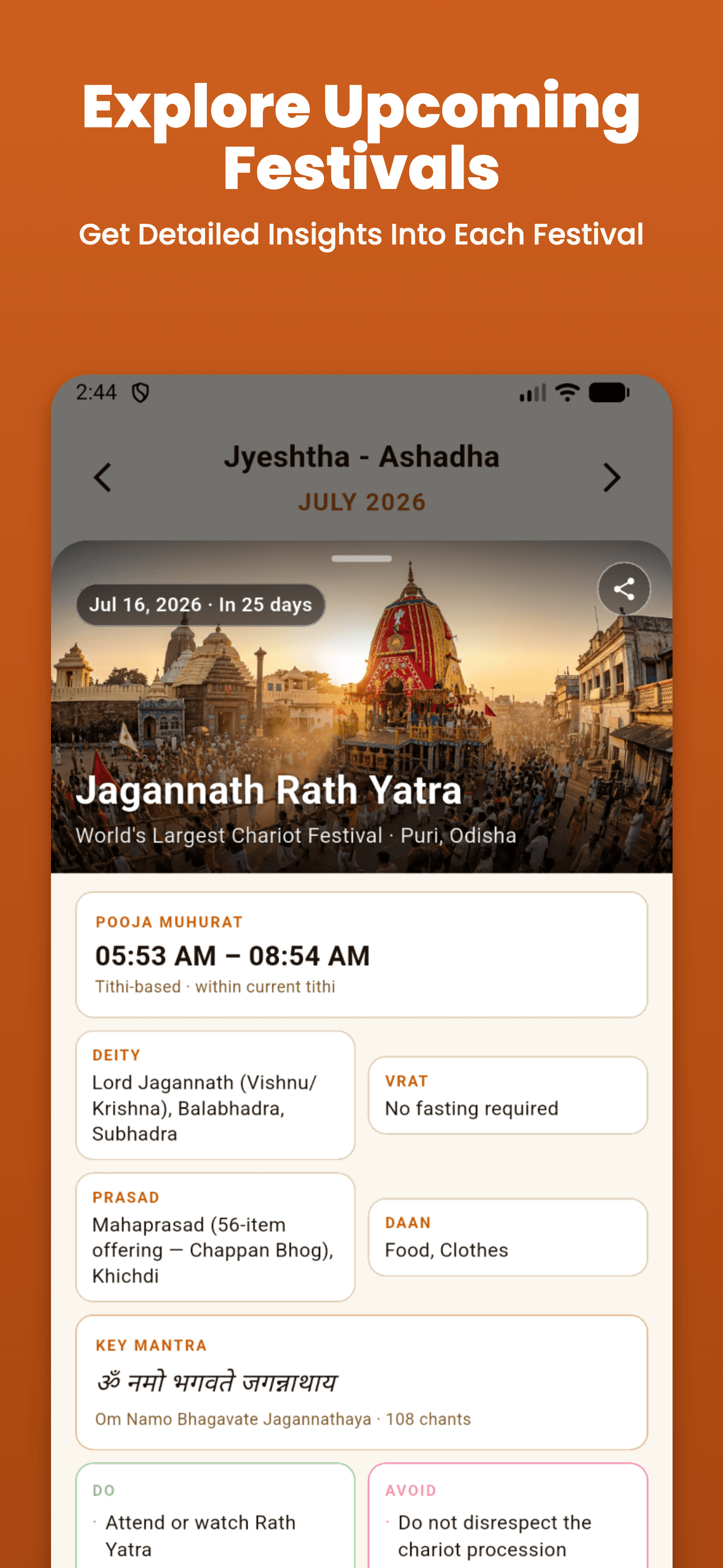
Never miss another vrat
You looked up Ashtami Shraddha. The app tracks every festival after it.
- Every festival and vrat of the year in one calendar
- Muhurat and Rahu Kaal for your exact location
- A reminder the day before, so no tithi slips past
