
The tilak is best applied in the afternoon muhurat; avoid Rahu Kaal.
Sisters apply tilak on brothers' foreheads; siblings celebrate bond
Bhai Dooj, also called Bhai Tika, Bhau Beej and Bhai Phonta, falls on Kartika Shukla Dwitiya, two days after Diwali, and closes the five-day festival. It celebrates the bond between brothers and sisters. According to the legend, Yama, the god of death, visited his sister Yamuna after a long separation. Overjoyed, she welcomed him with a tilak, an aarti and a feast. Moved, Yama granted her a boon: every brother who receives a tilak and a meal from his sister on this day will be free of the fear of untimely death, and the sister will be blessed. In another story, Krishna, after killing Narakasura, visited his sister Subhadra, who welcomed him with a tilak and flowers. Sisters invite their brothers home, apply a tilak of roli and rice, perform aarti, and pray for their long life and success; brothers give gifts and promise to protect them. The brother eats the meal at his sister's home, and in Mathura brother-sister pairs bathe together in the Yamuna at Vishram Ghat. In Bengal Bhai Phonta sisters recite a rhyme placing 'a thorn at Yama's door'.
Many sisters fast until they have applied the tilak and fed their brother.
Published
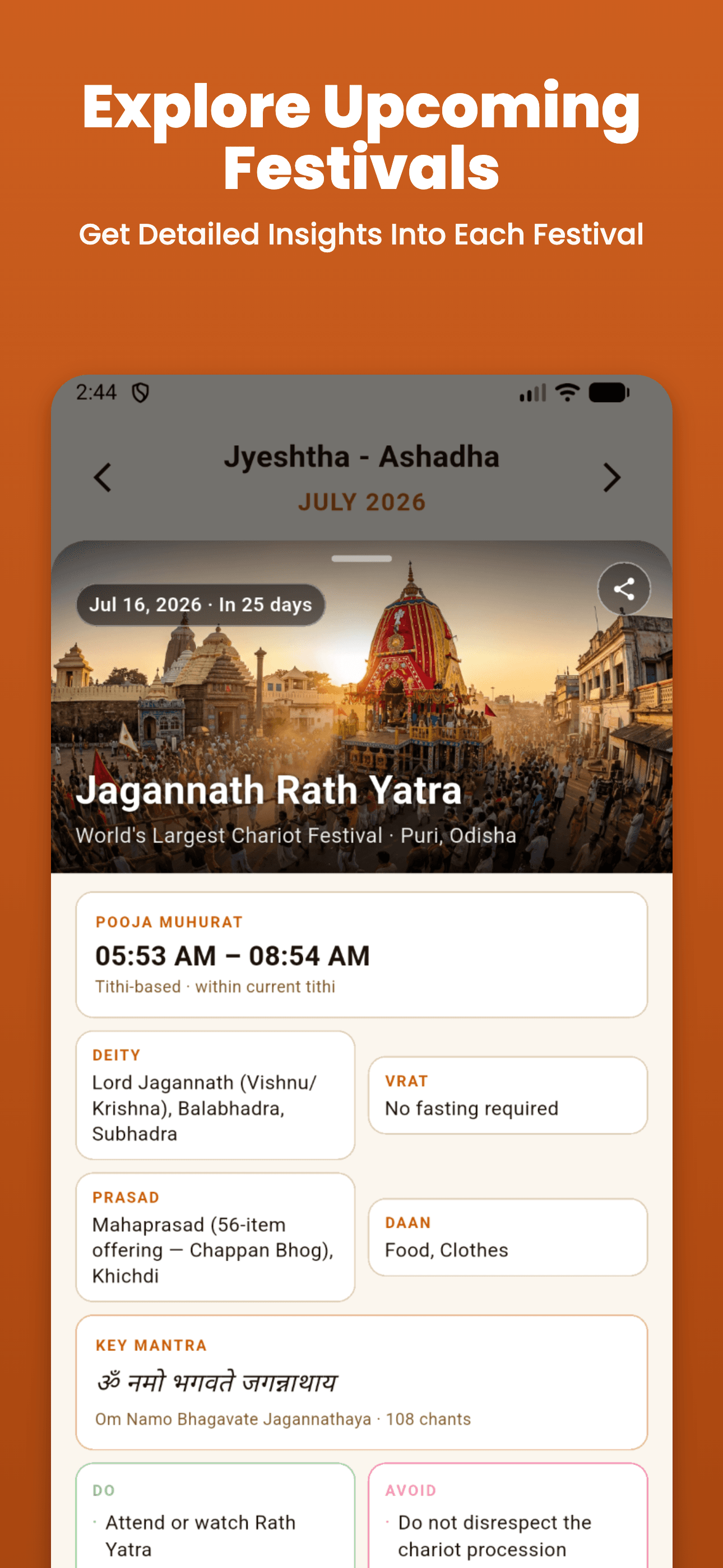
Never miss another vrat
You looked up Bhaiya Dooj. The app tracks every festival after it.
- Every festival and vrat of the year in one calendar
- Muhurat and Rahu Kaal for your exact location
- A reminder the day before, so no tithi slips past
