
Diwali as the festival of rows of lamps; homes, rivers and temples lit to welcome Lakshmi
Deepamalika, meaning 'a garland of lamps', is the ancient name for Diwali used in the Puranas and in Kalhana's Rajatarangini, the chronicle of Kashmir. It refers specifically to lighting rows of lamps on the moonless night of Kartika Amavasya. The Skanda Purana and Padma Purana prescribe lighting lamps in temples, at rivers, crossroads, cowsheds, wells and under sacred trees on this night, both to welcome Goddess Lakshmi and to light the way for ancestors returning to the world of the Pitris after Pitru Paksha. Lamps symbolise the soul's inner light overcoming ignorance. The Deepamala also recalls the lamps lit by the people of Ayodhya to welcome Rama, the lamps lit for Krishna's victory over Narakasura, and, for Jains, the lamps lit by the eighteen kings of Kashi and Kosala when Lord Mahavira attained nirvana at Pawapuri on this night, saying 'since the light of knowledge is gone, let us make material light'. Floating lamps on rivers and lighting a lamp at every doorway, window and water source is the heart of Deepamalika.
No fast is required.
Published
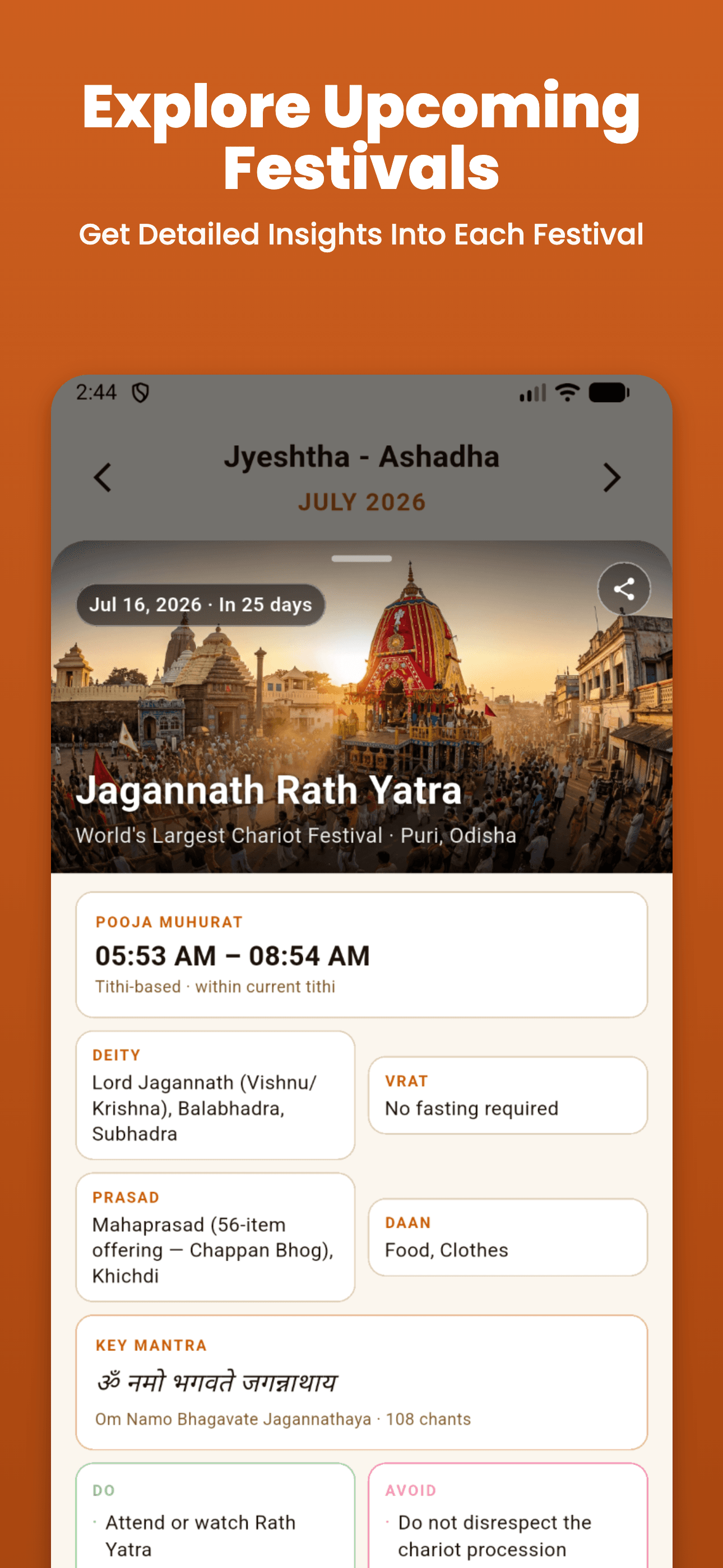
Never miss another vrat
You looked up Deepamalika. The app tracks every festival after it.
- Every festival and vrat of the year in one calendar
- Muhurat and Rahu Kaal for your exact location
- A reminder the day before, so no tithi slips past
