
Sannyasi Shraddha: honours ancestors who took sannyasa. Families who avoided grain on Ekadashi complete their brahmin bhojan today.
Shraddha on 12th tithi; for ancestors who took sannyasa, and those who died on Dwadashi
Dwadashi Shraddha is the Pitrupaksha rite of the twelfth lunar day of the dark fortnight of Ashwin. Besides ancestors who departed on a Dwadashi, it is known as Sannyasi Shraddha: the day on which the family remembers forebears who renounced the world and took sannyasa, as well as saints, ascetics and Vaishnava devotees of the lineage. Because a sannyasi has already performed his own funeral rites at initiation and is considered freed from the need of pinda, the offering is made in a spirit of reverence rather than obligation, often with worship of Lord Vishnu and the feeding of sadhus and brahmins. It also follows the parana of Indira Ekadashi, so families who avoided grain on Ekadashi complete their brahmin bhojan today. Tarpan with water and black sesame is offered in the aparahna with the sacred thread to the right. Honouring the renunciants of one's line is believed to draw their spiritual blessing upon the family, strengthening devotion, wisdom and inner peace.
Those who kept Indira Ekadashi break the fast in the Dwadashi parana window before the shraddha.
Published
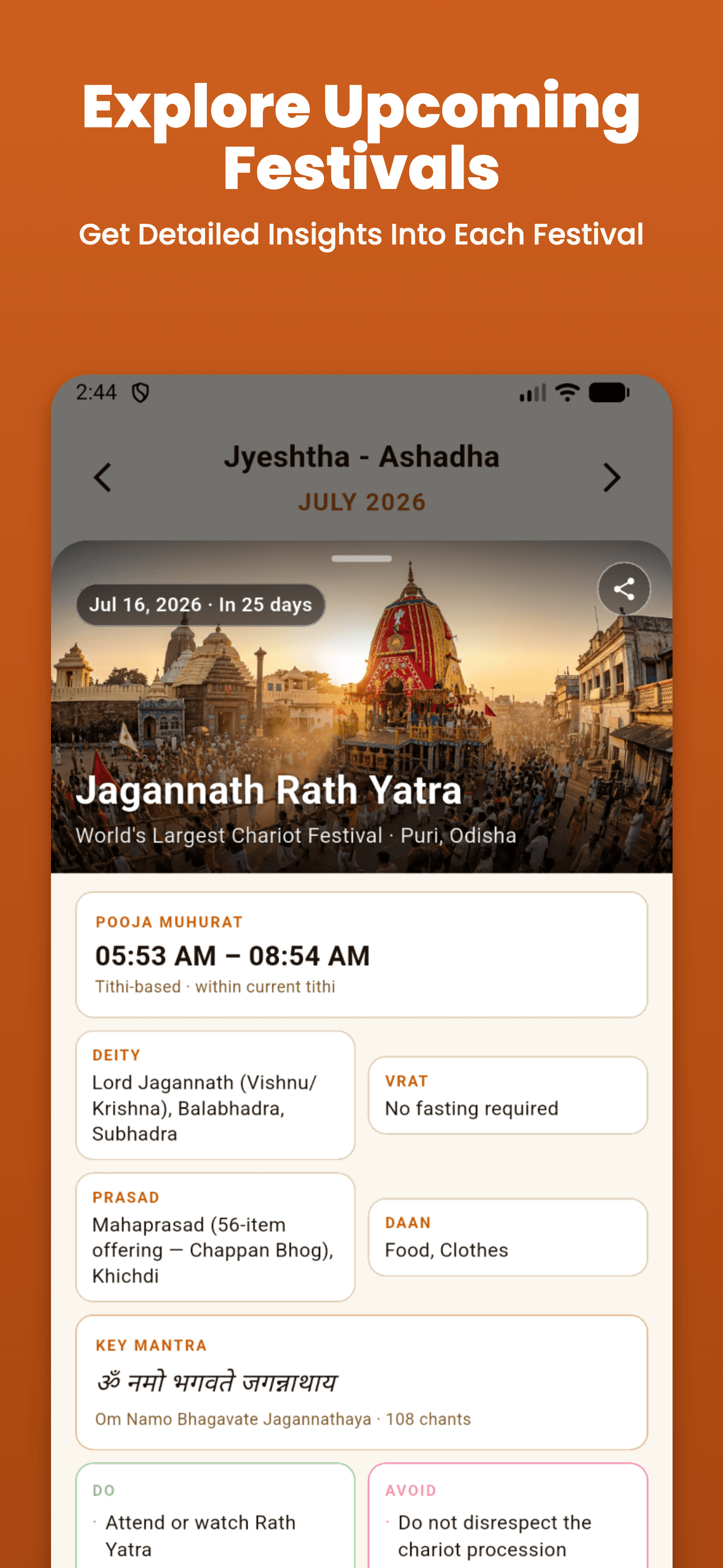
Never miss another vrat
You looked up Dwadashi Shraddha. The app tracks every festival after it.
- Every festival and vrat of the year in one calendar
- Muhurat and Rahu Kaal for your exact location
- A reminder the day before, so no tithi slips past
