
Mothers keep a nirjala fast for their children's long life; Bihar, Jharkhand, UP and Nepal
Jivitputrika Vrat, popularly called Jitiya or Jiutiya, is a three-day observance kept by mothers for the long life, health and protection of their children. It falls on Ashwin Krishna Ashtami (Purnimanta) in the middle of Pitrupaksha and is kept with great devotion in Bihar, Jharkhand, eastern Uttar Pradesh and Nepal. The first day, Nahay Khay, is for a purifying bath and a single satvik meal, often with marua roti and noni saag; the second day is the nirjala fast, kept without even a drop of water; and on the third morning the fast is broken in the parana. The vrat honours Jimutavahana, the Gandharva prince who offered his own body to Garuda in place of a young Naga to be sacrificed that day, and so won the release of all the Nagas' sons. Mothers make an image of Jimutavahana from kusha grass and clay figures of a kite (cheel) and a she-jackal (siyarin), whose story teaches that a vow kept faithfully bears fruit for one's children. A red or yellow Jitiya thread with a pendant is worn afterwards.
The fast is kept without food or water from sunrise on Ashtami to the parana the next morning.
Published
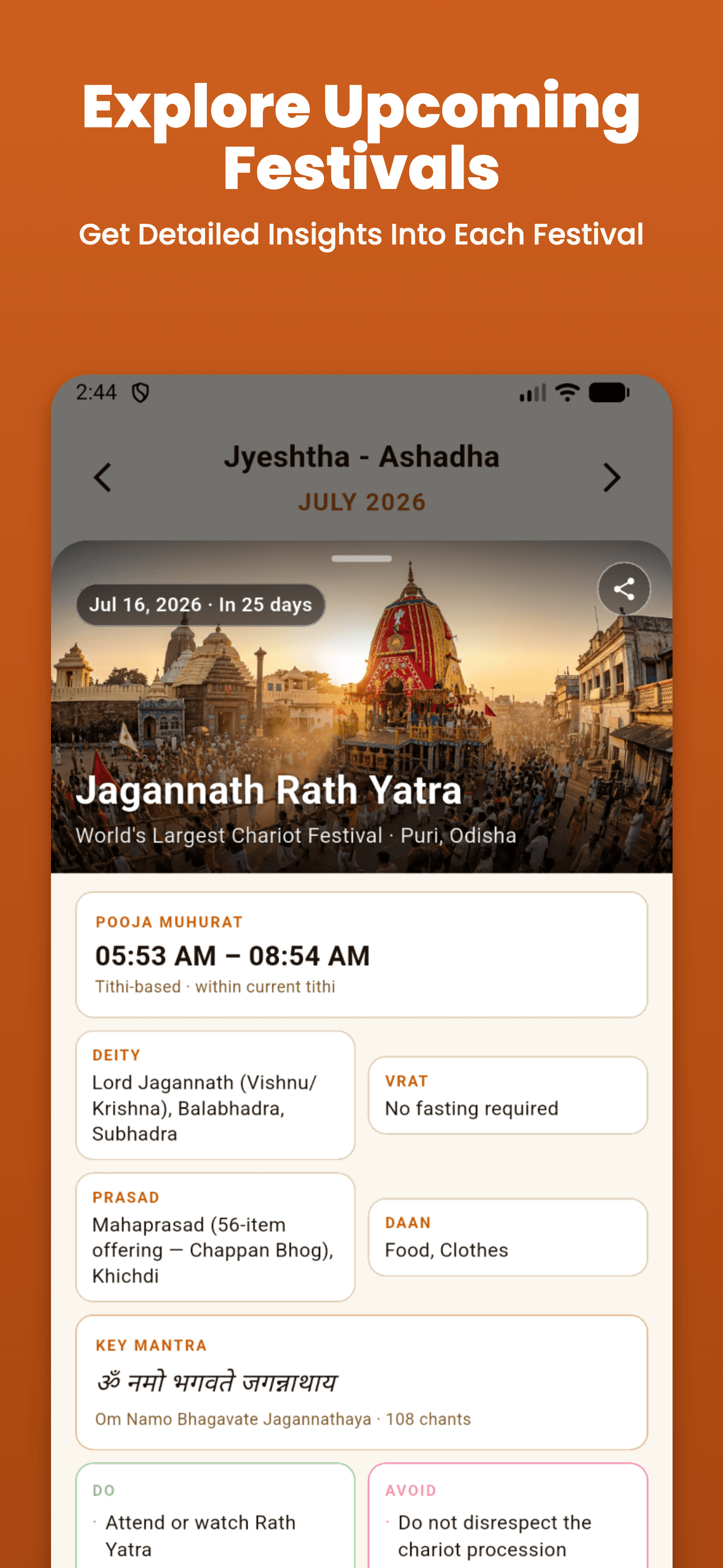
Never miss another vrat
You looked up Jivitputrika Vrat. The app tracks every festival after it.
- Every festival and vrat of the year in one calendar
- Muhurat and Rahu Kaal for your exact location
- A reminder the day before, so no tithi slips past
