
Morning sankalp that formally begins the Bengali Durga Puja on Shashthi
Kalparambha is the ceremonial beginning of Durga Puja in the Bengali tradition, performed on the morning of Maha Shashthi. Kalpa here means the ritual resolve: the host of the puja, whether a family or a community committee, takes a solemn sankalp before the Goddess to carry out her worship through the coming days according to the scriptures — the Kalika Purana, Devi Purana and Brihannandikeshwara Purana that govern the Bengali rite. A kalash, the ghat, is filled with water and placed before the image, and the Goddess and her companions are invoked into it. Only after Kalparambha can the evening rites of Bodhon, Amantran and Adhivas take place. In some old households whose kalpa begins earlier — on Krishna Navami, Pratipada or Shashthi — the puja has been kept in unbroken succession for centuries, and Kalparambha marks that continuity. For devotees it is the moment the waiting of the year ends: the Mother is formally received as a daughter returning to her parents' home with her children Lakshmi, Saraswati, Ganesha and Kartikeya.
The host of the puja often fasts until the sankalp is complete.
Published
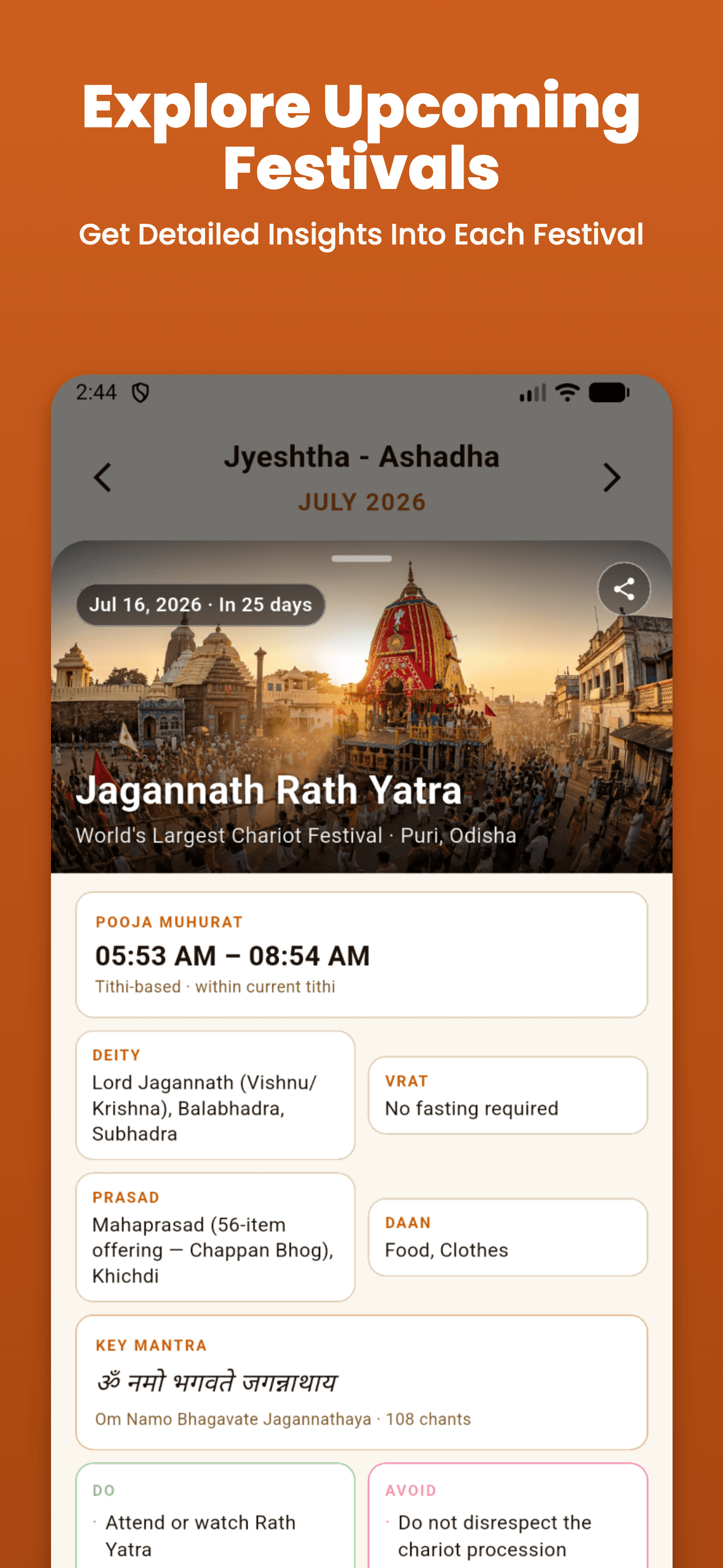
Never miss another vrat
You looked up Kalparambha. The app tracks every festival after it.
- Every festival and vrat of the year in one calendar
- Muhurat and Rahu Kaal for your exact location
- A reminder the day before, so no tithi slips past
