
Goddess Lakshmi worshipped on Diwali night; homes lit and decorated
Lakshmi Puja is the central ritual of Diwali, performed on Kartika Amavasya in Pradosh Kaal, when Goddess Mahalakshmi, the consort of Vishnu and giver of wealth, fortune and wellbeing, is welcomed into the home. The Puranas say Lakshmi emerged from the churning of the ocean of milk (Samudra Manthan) on this Amavasya, seated on a lotus, and chose Vishnu as her consort; she is also said to have been freed on this day from King Bali's prison by Vishnu as Vamana. On this night she roams the earth and settles in homes that are clean, well lit, and full of devotion, which is why the door is left open and lamps burn through the night. The puja is done together with Lord Ganesha, so that wealth comes with wisdom and without obstacles, and often with Kubera (the treasurer) and Saraswati. The most auspicious time is Pradosh Kaal overlapping a fixed ascendant (Sthir Lagna, especially Vrishabha), so that Lakshmi stays. Traders worship their account books (Chopda or Bahi Khata), and families worship silver coins, gold, and the cash box. In Bengal and Odisha, Lakshmi is worshipped on Sharad Purnima instead, and Kali on this night.
Many fast from morning and eat after the puja.
Published
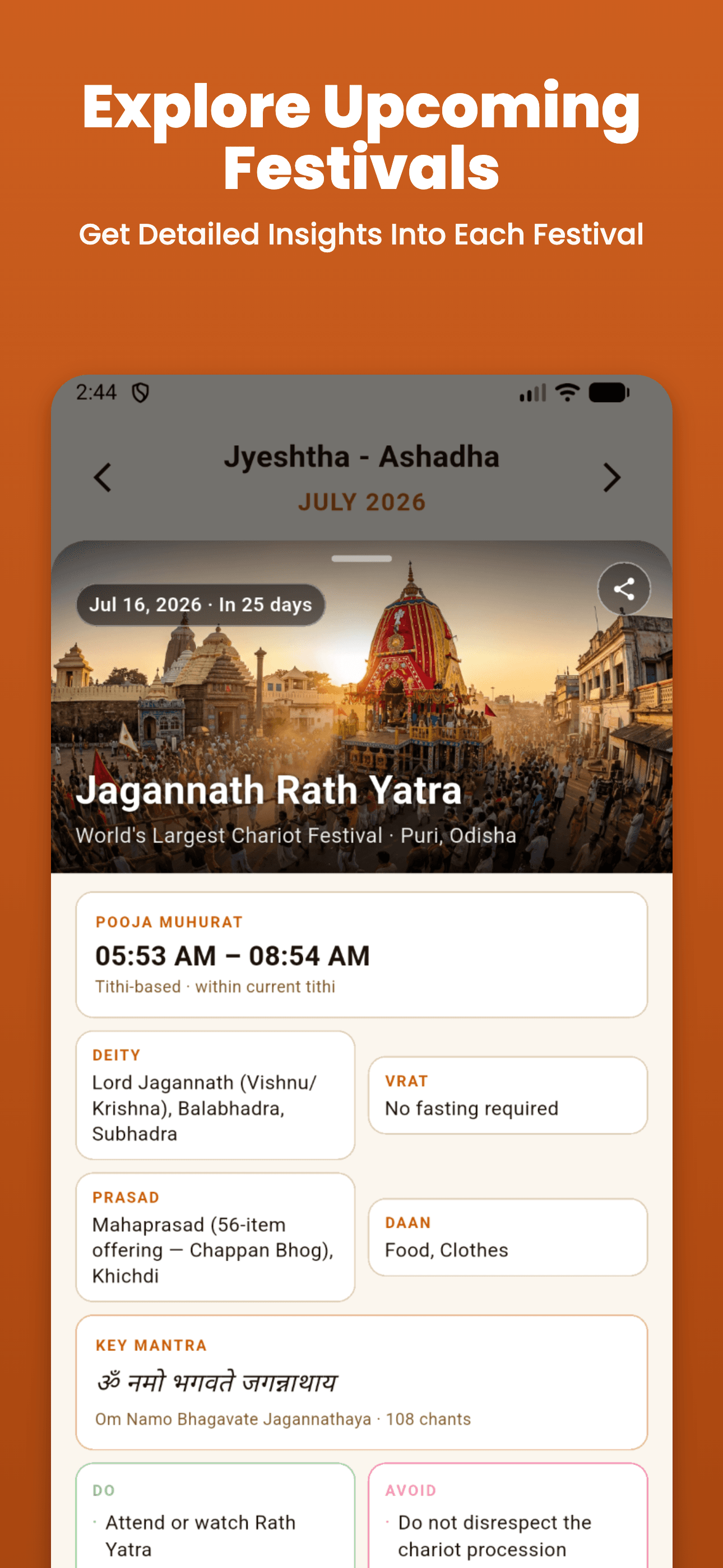
Never miss another vrat
You looked up Lakshmi Puja. The app tracks every festival after it.
- Every festival and vrat of the year in one calendar
- Muhurat and Rahu Kaal for your exact location
- A reminder the day before, so no tithi slips past
