
The Navpatrika bath precedes the prana pratishtha of the idol.
Worship of nine plants representing Goddess Durga in Bengal tradition
Navpatrika Puja is the dawn ritual of Maha Saptami in the Bengali Durga Puja, in which the Goddess is worshipped in nine plants bound together as one. The nine are banana, colocasia (kachu), turmeric, jayanti, bilva (wood apple), pomegranate, ashoka, arum (maan kochu) and paddy, and each is the seat of one form of the Goddess: Brahmani, Kalika, Durga, Kartiki, Shiva, Raktadantika, Shokarahita, Chamunda and Lakshmi. Tied with aparajita creeper and a pair of bilva fruits, the bundle is taken at dawn to a river or pond, bathed with the sound of conch and dhak, draped in a red-bordered white sari like a new bride, and brought back to stand beside Ganesha in the pandal. From this she is affectionately called Kola Bou, the banana bride — though she is not Ganesha's wife, but the Goddess herself. The ritual reflects Durga as Shakambhari, the Mother who nourishes through vegetation, and the agricultural roots of the autumn festival. After the Navpatrika bath, the prana pratishtha of the idol is performed and the main worship of Saptami begins.
Devotees usually fast until they have offered pushpanjali; many keep a vegetarian diet on Saptami.
Published
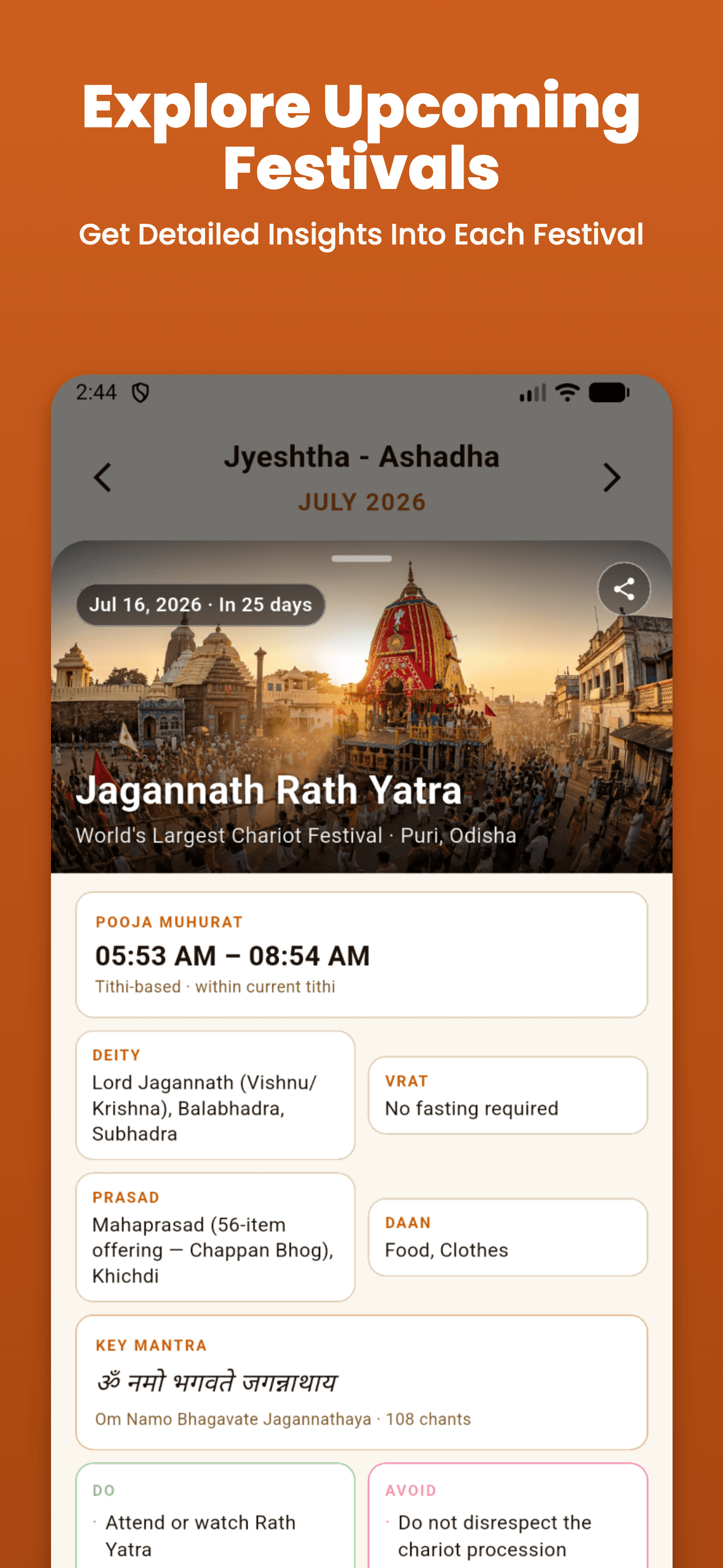
Never miss another vrat
You looked up Navpatrika Puja. The app tracks every festival after it.
- Every festival and vrat of the year in one calendar
- Muhurat and Rahu Kaal for your exact location
- A reminder the day before, so no tithi slips past
